Keonbelt: Powering the Future of Solar Manufacturing with Reliable Photovoltaic Transmission Belts
Trusted Transmission Solutions for Photovoltaic Cell Equipment Manufacturers
As the global photovoltaic (PV) industry continues to expand, solar cell manufacturers are facing increasing demands for higher production efficiency, cleaner manufacturing environments, and more reliable automation systems. Every component in a photovoltaic production line plays a critical role in maintaining precision and stability — including the transmission belts that directly support the movement of solar cells throughout the manufacturing process.
Keonbelt specializes in providing high-performance photovoltaic transmission belts designed for photovoltaic cell equipment, offering safe, clean, and durable transmission solutions for advanced solar manufacturing lines.
With years of expertise in industrial transmission technology, Keonbelt has become a trusted long-term supplier and solution partner for leading Photovoltaic Cell Equipment brands in China, including Maxwell and Autowell, providing stable and reliable transmission components that help improve production efficiency and equipment performance.
Advanced Photovoltaic Transmission Belts for High-Demand Production Environments
Photovoltaic cell manufacturing requires extremely high standards for cleanliness, chemical resistance, dimensional stability, and operational reliability. Traditional transmission solutions may face challenges such as contamination risks, material degradation, or performance instability under continuous production conditions.
Keonbelt photovoltaic belts are engineered specifically for solar cell production environments, featuring:
 Safe and Clean Material Performance
Designed for applications where product safety and cleanliness are essential, Keonbelt transmission belts help reduce contamination risks during photovoltaic cell transportation.
Excellent Chemical Resistance
PV manufacturing processes often involve exposure to chemical materials. Keonbelt belts are developed with excellent resistance to chemical environments, ensuring long-term stability and consistent performance.
High Precision and Stable Transmission
Photovoltaic equipment requires accurate positioning and smooth movement. Keonbelt belts provide reliable transmission performance to support high-speed and precision production processes.
Long Service Life and Reduced Maintenance
With optimized materials and manufacturing processes, Keonbelt belts deliver excellent wear resistance and durability, helping customers reduce downtime and improve production efficiency.
Key Photovoltaic Belt Models
Keonbelt provides a wide range of specialized transmission belt solutions for photovoltaic equipment, including:
FU40BR / FU-40BR Photovoltaic Transmission Belt
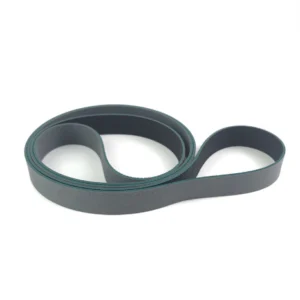
Designed for photovoltaic cell equipment applications, FU40BR offers excellent flexibility, stable running performance, and reliable transmission accuracy.
Main advantages:
- Stable operation under continuous production
- Excellent wear resistance
- Suitable for precision photovoltaic equipment
- Reliable performance in demanding environments
FU40BRD / FU-40NRD High-Performance Belt
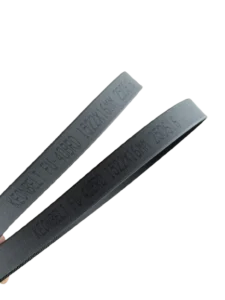
FU40BRD is developed for applications requiring enhanced durability and environmental resistance.
Features include:
- Improved chemical resistance
- Stronger operational stability
- Suitable for long-term industrial operation
- Reduced replacement frequency
EL-14GA Photovoltaic Equipment Belt
EL-14GA is same as FU-40br, some peer named it as EL-14GA, it is widely used in precision transmission systems where smooth movement and accurate positioning are required.
Application advantages:
- High transmission accuracy
- Excellent flexibility
- Stable performance during high-frequency operation
ELASTIC BELT FU-40B
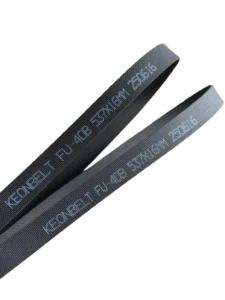
The FU-40B elastic belt provides reliable elasticity and adaptability for photovoltaic automation equipment.
Key characteristics:
- Flexible structure
- Smooth transmission
- Excellent compatibility with automated production systems
Long-Term Partnership with Leading Photovoltaic Equipment Brands
Quality and reliability are the foundation of Keonbelt’s development.
In China’s rapidly growing photovoltaic equipment industry, Keonbelt has established long-term supply partnerships with leading Photovoltaic Cell Equipment manufacturers such as:
- Maxwell
- Autowell
By continuously improving product performance and providing customized transmission solutions, Keonbelt supports these equipment manufacturers in delivering stable and efficient solar production solutions to global photovoltaic companies.
Our mission is not only to manufacture transmission belts but also to become a reliable technology partner for the renewable energy industry.
Supporting the Global Solar Energy Revolution
The photovoltaic industry is entering a new era of intelligent manufacturing. Higher efficiency, cleaner production, and smarter automation are becoming essential requirements for solar manufacturers worldwide.
Keonbelt is committed to developing advanced photovoltaic transmission solutions that help equipment manufacturers and solar factories achieve:
- More stable production processes
- Higher equipment efficiency
- Lower maintenance costs
- Safer and cleaner manufacturing environments
From China to global photovoltaic markets, Keonbelt continues to provide dependable transmission technology that supports the growth of renewable energy.
Keonbelt — Reliable Transmission Solutions for the Future of Solar Manufacturing.